# Artom's Space
---
## Finding the Romance in the Chaos: Lessons from Our Startup's Early Days
# Random notes: Lessons from Our Startup's Early Days
Building a startup is a wild ride. Your daily life becomes highly intentional, yet completely unpredictable. You have days where you crush it, and you have "non-days" where you push hard but see zero external progress. You reach out to people, and no one replies. You launch a feature, and crickets chirp.
Then, completely out of nowhere, something clicks. That unpredictable jump from nothing working to something finally taking off is the most exciting part of the journey. It is the romance in the chaos. Here is a look at what we are learning as we navigate this early-stage unpredictability, from finding our growth levers to designing onboarding flows that actually connect with people.
## The unpredictable nature of finding traction
When you are trying to find product-market fit, you do things that don't scale. Sometimes, you build things specifically to impress a single partner.
Early on, we built an integration with Framer to get a specific partner on board. We pushed it live. Nobody used it. It sat there doing nothing for a while. But then, a random backlink inside the app got indexed by search engines. Suddenly, that forgotten integration started driving inbound traffic and new discoveries.
You cannot perfectly model that kind of growth. You just have to put enough hooks into the world and see what catches.
The same goes for your analytics. You might look at your dashboard and think your product is failing. We saw terrible retention numbers initially. Then we realised a core messaging feature had a bug and was not actually sending messages. Once we fixed the bug, retention drastically improved. You have to constantly ask yourself if you are even looking at the right data before you panic.
## B2B versus B2C is just a question of relationship depth
It is easy to overcomplicate the difference between selling to businesses and selling to consumers. Ultimately, they are both just groups of people with goals and frustrations.
The real difference lies in relationship depth. B2B allows you to build very deep, high-touch relationships with a small number of users. B2C requires you to build relatively shallow relationships with a massive group of people.
Regardless of the model, the core challenge is the same. You have to figure out what people actually need. This is often very different from what they explicitly tell you they need. If you can solve a high-value problem for a major enterprise team, you build a halo effect around your product. A single successful deployment with a well-known design team can validate your tool and make it much easier to attract everyone else.
---
## Why Apple never gets it right with a new product until a later generation and the exception to that.
# Why Apple never gets it right with a new product until a later generation and the exception to that.
I recently ran into a YouTube video with the former Vice President at Apple, Dan Riccio. It's a talk after he pretty much decided to step down and retire. It correlates deeply with a book that I've been reading called [Apple in China](https://en.wikipedia.org/wiki/Apple_in_China). A lot of the things that are covered in the book show up in Dan's talk, so I feel they are both very, very deeply connected. Give you some time and see if you want to invest an hour and a half of your life. Here below are my highlights from what I found interesting about it.
The full video
If you look back at Apple's history, the first version of a revolutionary product is rarely the one that changes the world. First generations are often compromised. They act as expensive proof-of-concepts while the company figures out what the product is actually supposed to be. Former Apple engineering executive Dan Riccio recently broke down this multi-decade journey. Let's look at how Apple iterates to find success.
## First generations are all about finding the foundation
When Apple enters a new category, they rarely nail the complete package on day one. Instead, they focus on establishing a foundational technology. They do this even if it means compromising on other features.
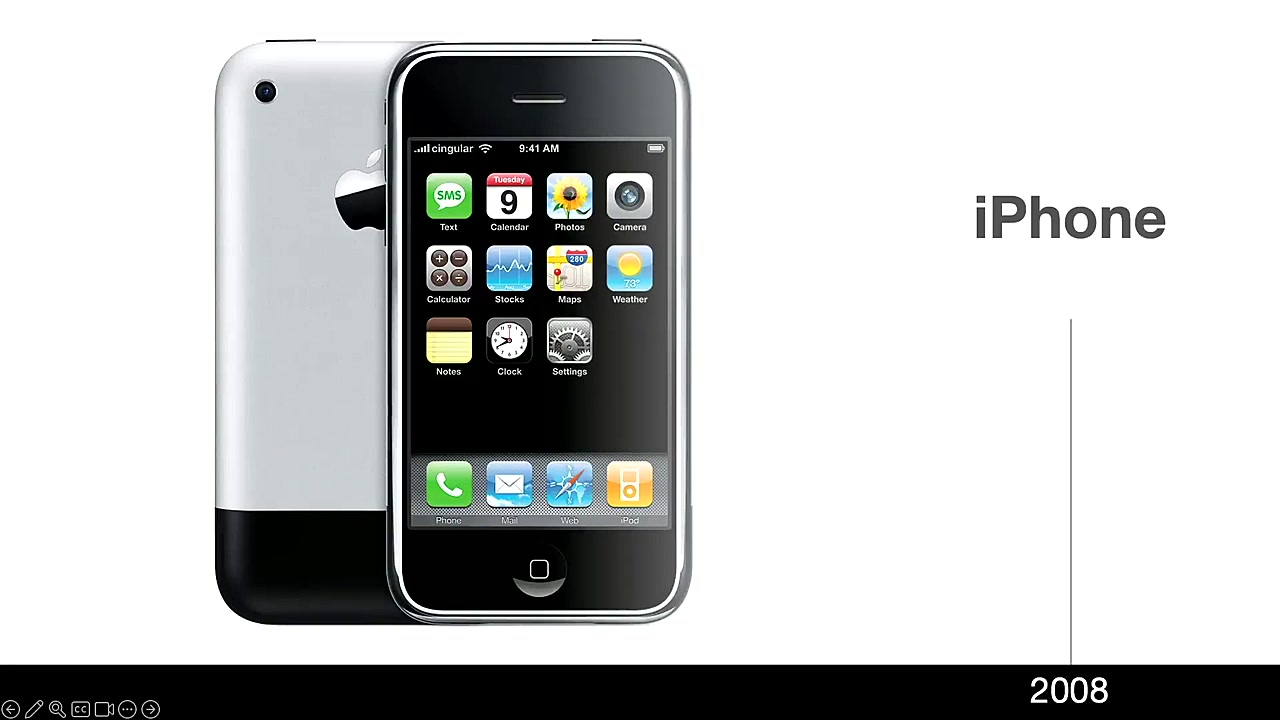
Take the original iPhone. Today, it is the standard for smartphones. But the first generation was heavily compromised. It launched without 3G, lacked a high-quality camera, and did not even have an App Store. What it did have was a revolutionary multi-touch interface. This allowed the screen to adapt to any application. That single foundational bet was enough to disrupt the industry. The device itself took a few years to mature.
The MacBook Air followed a similar path. Steve Jobs famously pulled it out of a manila envelope to show off its incredibly thin profile. But as an everyday computer, it struggled. It relied on a slow 1.8-inch hard drive borrowed from the iPod. It featured only a single drop-down USB port and suffered from thermal throttling. It took until the third generation for the Air to find the perfect balance of performance and portability. It eventually became Apple's best-selling Mac.

## Pivoting to find product-market fit
Sometimes, Apple launches a product with a specific use case in mind. Then they realize the market wants something entirely different.
When the Apple Watch first launched, Apple positioned it as a high-end fashion accessory. They even sold a solid gold Edition model that retailed for $15,000. Apple eventually observed how people were actually using the device. They executed a hard pivot into health and fitness. Today, features like heart rate monitoring and ECGs are the core of the Apple Watch experience. It transformed into a life-saving wearable rather than just a luxury timepiece.
The Apple TV started its life explicitly labeled as a hobby. The first iteration was essentially a hard drive that synced with your Mac. It used a basic interface. It took years of iteration to evolve into the app-driven streaming hub it is today.
## When beautiful design isn't enough
Apple is synonymous with industrial design. They have learned the hard way that form cannot entirely supersede market realities.
The PowerMac G4 Cube is perhaps the most famous example of this. It was an engineering masterpiece. It was an 8-inch cube suspended in clear acrylic. It featured passive cooling, a touch-sensitive solid-state power button, and a pop-up handle that gave you instant access to the internals.
However, it was priced at $1,799 without a display. This was far beyond what the market was willing to pay for its specs. Despite its elegance, the G4 Cube was canceled just nine months after it launched. It was a beautiful product but a commercial failure.
## The rare exception: Cannibalizing your own success
Apple usually iterates slowly and methodically. There are rare moments where they take a massive and immediate leap. They do this even if it hurts them in the short term.
The iPod mini was the most successful product Apple had ever created up to that point. Instead of releasing a slightly better version, Apple killed it entirely to launch the iPod nano.
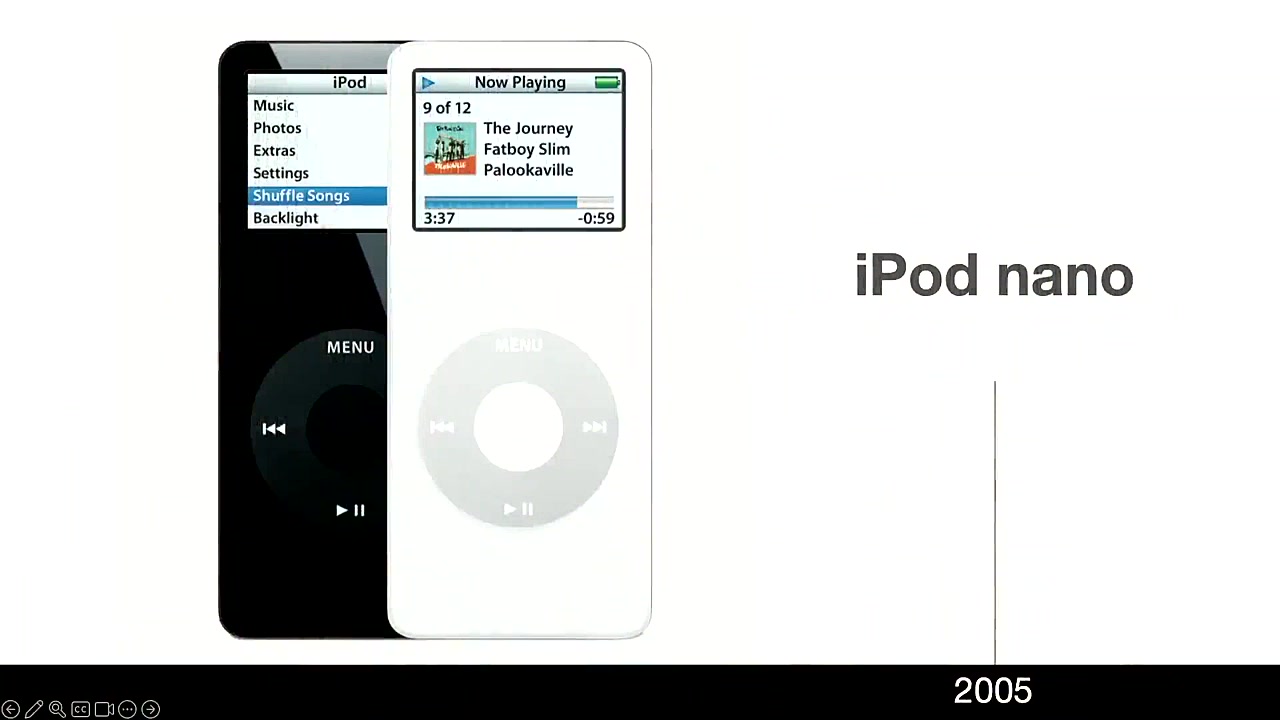
Moving from miniature hard drives to flash memory allowed the nano to be impossibly thin. It was a massive risk to discontinue their best-selling device. But it paid off immediately. The lesson here was clear. If you do not disrupt yourself, someone else will.
## Key takeaways
Looking at Apple's track record, a few clear patterns emerge for anyone building products:
- **Don't wait for perfection:** The first version only needs to prove the core concept. The multi-touch interface on the iPhone is a perfect example. The polish will come later.
- **Listen to your users:** If your fashion device is being used as a fitness tracker, lean into fitness.
- **Be willing to kill your darlings:** The transition from the iPod mini to the nano shows that protecting your current revenue can be the biggest risk to your future.
## The bottom line
Apple's latest major bet is the Apple Vision Pro. It is playing out exactly like the original iPhone or MacBook Air. It is an engineering marvel that is heavy and expensive. It is searching for its killer app.
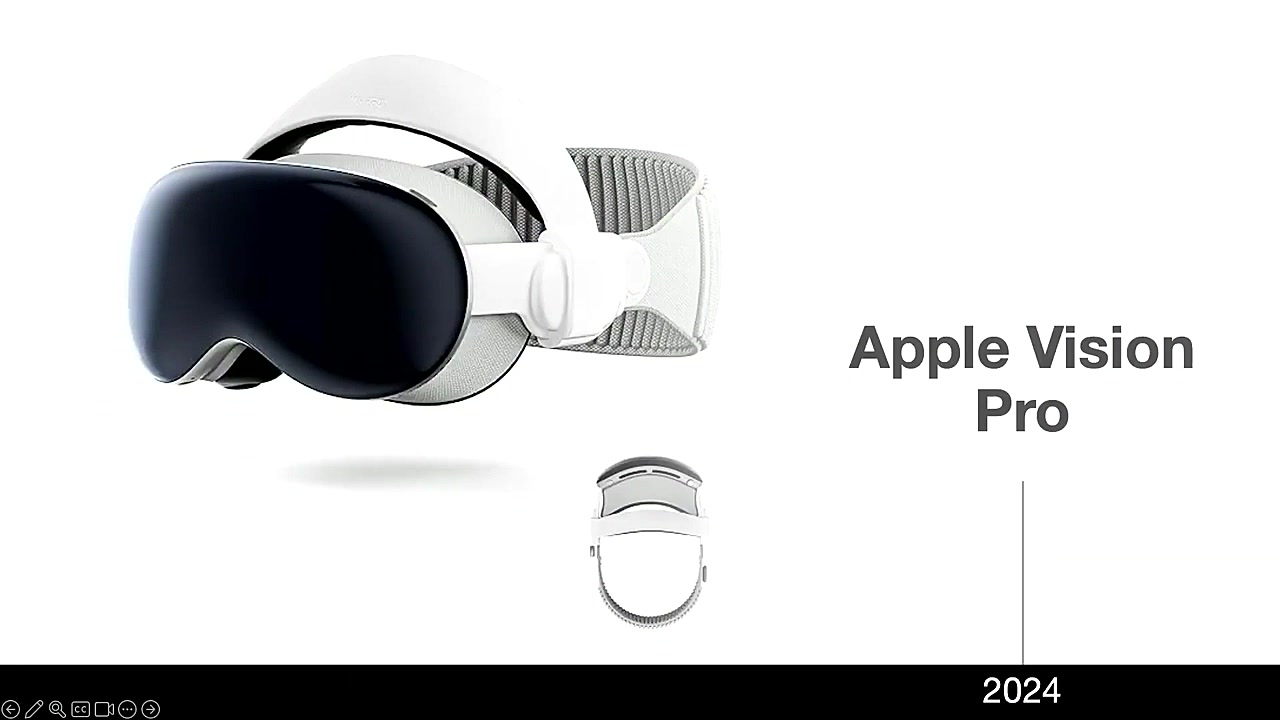
If history is any indicator, this first generation is not the finish line. It is just the foundation for the next decade.
---
## What is the minimum success bar for a 1st time founder?
# What is the minimum success bar for a 1st time founder?
When you launch your first startup, it is easy to tie your entire identity to its success. You pour your soul into it, and the thought of it failing feels like a personal failure. But what is the actual baseline for success when you are a first-time founder? The reality is that the bar is likely much different from what you think.
#### The danger of the first-time high
There is a unique intoxicating feeling that comes with building your own product for the very first time. You are motivated simply by the fact that you are creating something that will live in the App Store. You are managing your own time and building your own vision.
But this excitement can be a trap. It is easy to get caught up in the thrill of being a founder and lose sight of whether the product itself is actually viable. When you have launched dozens of projects, the sheer novelty wears off. You have to learn to look at your work objectively and evaluate if the process actually makes sense.
#### Detaching your soul from the product
You need to step back and look at your startup in abstraction. View it as a product, not as an extension of yourself. When you are deeply attached, you risk selling your soul to the corporation of your own making.
If the product does not work, it means a specific set of hypotheses and features did not resonate with the market. It does not mean you are a failure. Treat the venture as a hypothesis. If you were building a product for a random niche, like an app for bicycle enthusiasts, you probably would not take its failure personally. You need to apply that same emotional distance to your current project, even if it is in a space you care deeply about.
#### The fear of the corporate/company fallback
The biggest fear for many new founders is messing up and having to go back to a standard corporate job. The thought of returning to a "cubicle" after tasting freedom feels like the ultimate defeat.
But here is the truth. You have not failed. By simply stepping out and building something from scratch, you have already done more than the vast majority of people who sit in corporate/company roles merely tweaking their CVs. You have taken a risk, built a product, and learned how to operate autonomously. That alone puts you far ahead.
#### Where this leaves us
The minimum success bar for a first-time founder is not building a unicorn. It is not even necessarily building a profitable business. The minimum bar is acquiring the irreplaceable experience of trying.
And if you do decide to return to the corporate world, you do so not as a defeated employee, but as a former founder. You can look a potential employer in the eye and say you know how to build things from scratch. If they want you, they are going to have to pay you a lot more. That is a success.
---
## Personal Stories
### A Train, a Tunnel, and a Book: How Architecture Became a Personal Monument
# A Train, a Tunnel, and a Book: How Architecture Became a Personal Monument
![]()
Buildings are more than just concrete and steel. They are memories set in stone. Growing up, I spent hours learning about architecture and making cardboard models with my father. He always found creative ways to broaden my knowledge when school felt difficult and boring.
Years later, those lessons took on a whole new meaning during a trip to Paris. I was on the Eurostar train, scheduled to meet a close friend. Two minutes before the train dipped underwater into the Channel Tunnel, I received a text. My 85-year-old father had passed away.
For the next 40 minutes under the water, time completely stopped. I arrived in Paris in a state of shock. But I decided to take the advice from my daughter's favorite musical, Mary Poppins. I put my best foot forward and kept moving. After lunch, my friend and I visited the Norman Foster exhibit at the Centre Pompidou. Seeing those architectural models brought back a flood of joyful memories of building things with my dad and spotting buildings that we liked and that challenged the statues quo.
At the end of the exhibit, I wanted an artifact to remember the day. I ended up with a massive two-volume book set published by Taschen a year later. Here is a look inside.
![]()
## The ultimate archive: Norman Foster Works
The first book is simply called **Norman Foster Works**. This is the larger volume of the two. It serves as a comprehensive document of all the buildings Norman Foster has created throughout his life.
The book traces his projects from the very beginning. It starts with an interview section to set the stage. From there, it moves into a brief summary of each building alongside various sketches and architectural plans. It even includes a sneak peek at unbuilt projects and future concepts waiting to be realized.
![]()
## Connecting the dots: Norman Foster Networks
The second book in the set has a bright green cover and is titled **Norman Foster Networks**. I highly recommend reading this one first.
Instead of just listing buildings, this book is a collection of the raw themes that inspired Foster's designs. It connects all the dots. The content is broken down into thematic chapters like **Roots**, **Flight**, **Alpine**, **Nature**, **Art**, **Making**, **Place**, and **Cities**.
### The beauty of Flight
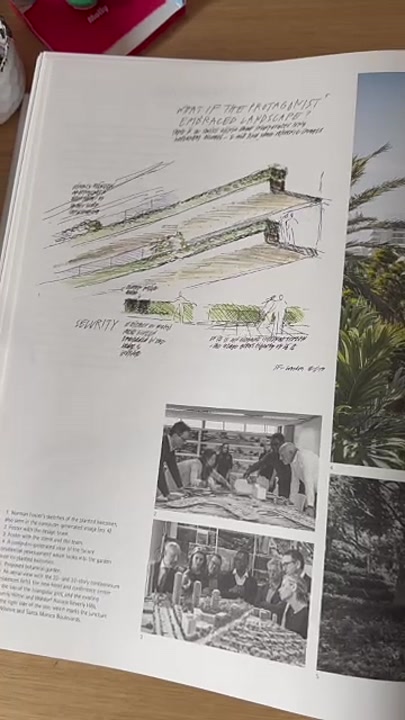
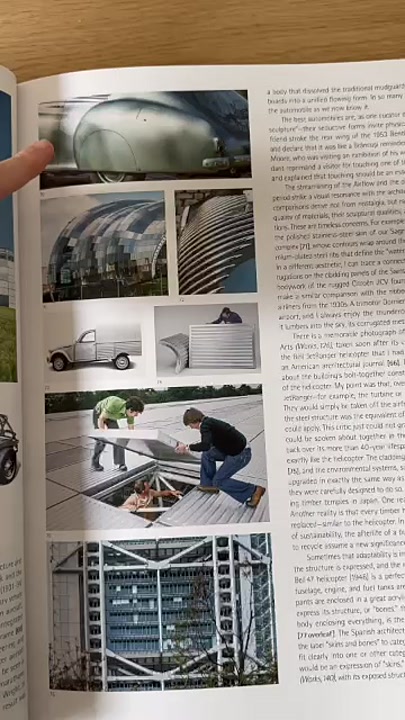
The **Flight** chapter covers Foster's love for aviation, airplanes, and gliders. A great tip is to keep both books open side by side while you read this section. The text frequently references the other volume. For example, it might point you directly to the Manchester Center on page **Works 554**.
This section gives you an insider look at his design process. You get to see exactly how the streamlined shapes of vintage cars and aircraft translated directly into the curved geometry of his buildings.
### Exploring Apple Park
There is also a deeply detailed look at the Apple campus in Silicon Valley. This section is incredibly special to me. I was lucky enough to visit this campus during the **WWDC** conference while working at a company called Craft.
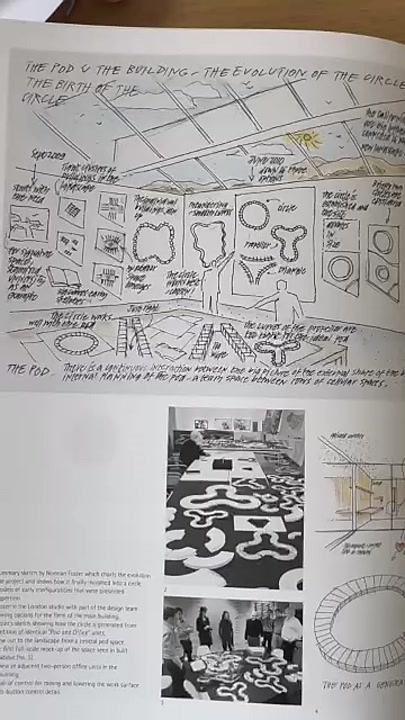
The book breaks down the schematic work and the thought process behind the massive ring structure. If you ever get the chance to attend that developer conference, I highly recommend reading up on the architecture beforehand. It completely changes how you experience the space.
### The Alpine connection
The **Alpine** section brings back fond memories of a trip I took to St. Moritz a few years ago. The book dives into Foster's fascination with the town's history and his love for cross-country skiing marathons.
It also features a specific home he designed in the area. The photography shows how he expertly paired traditional exposed wooden beams with highly modern, contemporary color accents.

## How to get your hands on a copy
These books are an absolute treasure, but they are also quite an investment. When I first looked into buying them, the retail price was over 400 pounds, or roughly 600 dollars.
I ended up waiting and getting my set during Taschen's annual sale. Every year, they offer 50 percent off their display books. If you want to own this collection without paying full retail price, keep an eye out for that publisher sale. You can also try browsing eBay, as used copies occasionally pop up there.
To an architecture student, these books are a factual archive of Norman Foster's incredible career. To me, they represent something much more profound.
They are a physical monument to my father. They sit in a very special place in my home today. Whenever I want to remember him and the passion we shared, I just open these pages and start reading.
---